Fizzled Endings
So many game sessions fizzle out in one of two ways: The Slog or The Rush.
When the session starts, everyone is engaged. But a few hours later, when the final confrontation arrives… everyone is running on fumes.
Either the group pushes on for another hour as people try to stay awake (The Slog), OR the ending has to be hurried so everyone can get home (The Rush).
This is disappointing for the GM, and anticlimactic for the players.
The problem is → time & energy are finite.
Energy goes down over the course of a session.
Some players come to the game already tired from a long day. Late-night games, sugary snacks, and alcohol don’t help. Decision-making and rules discussion slowly drain what’s left.
This means that the most important scenes tend to arrive when everyone is least able to engage with them.
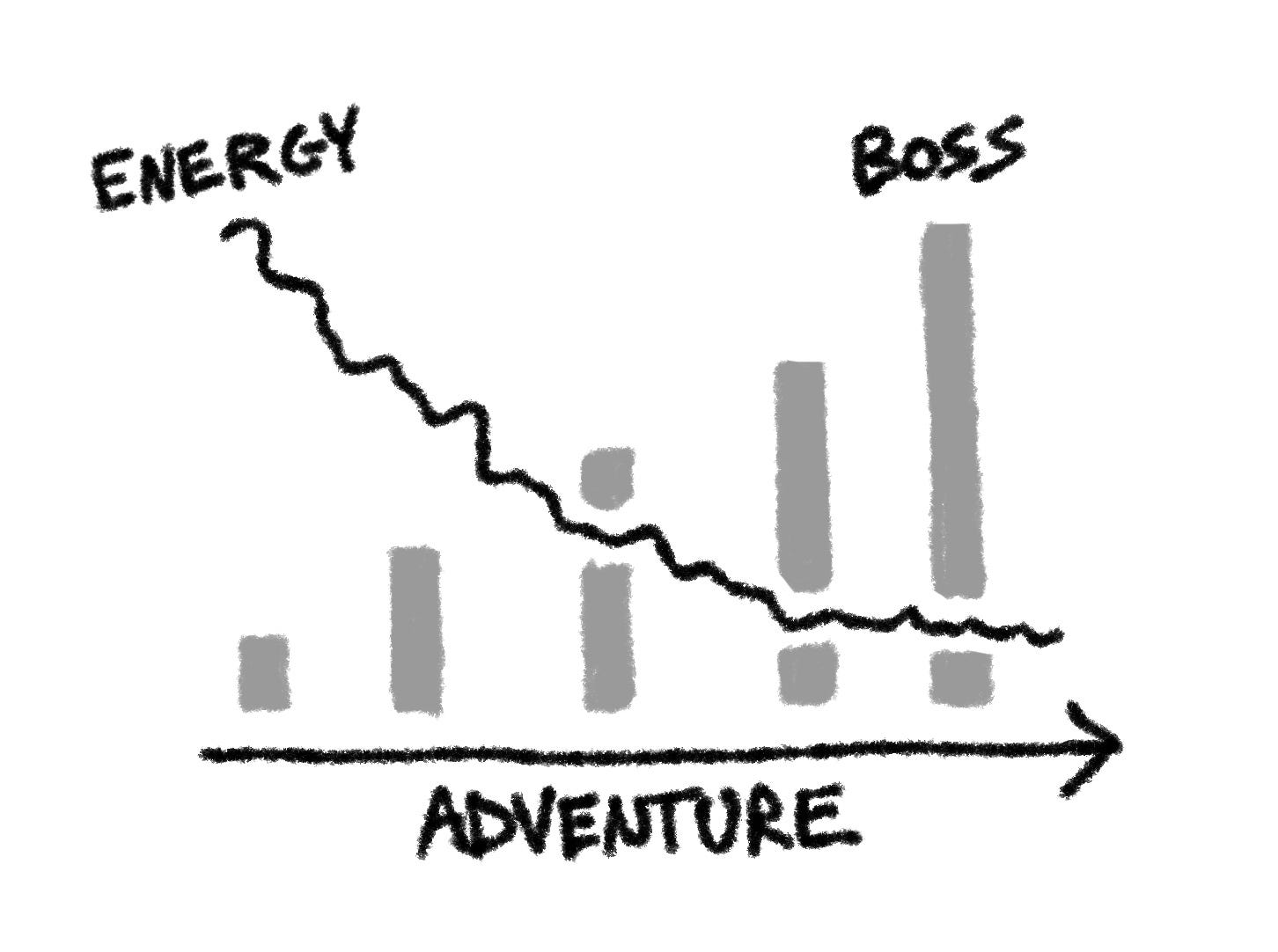
To mitigate this, it helps to look at each scene beforehand and decide how much time it actually deserves.
Many scenes feel necessary but quietly expand if left unchecked: quest givers, travel, shopping, random encounters, lengthy investigations.
Many of these can be shortened, skipped, or handled with a few lines of narration, to make sure there’s enough room for The Good Stuff — the scenes that really matter.
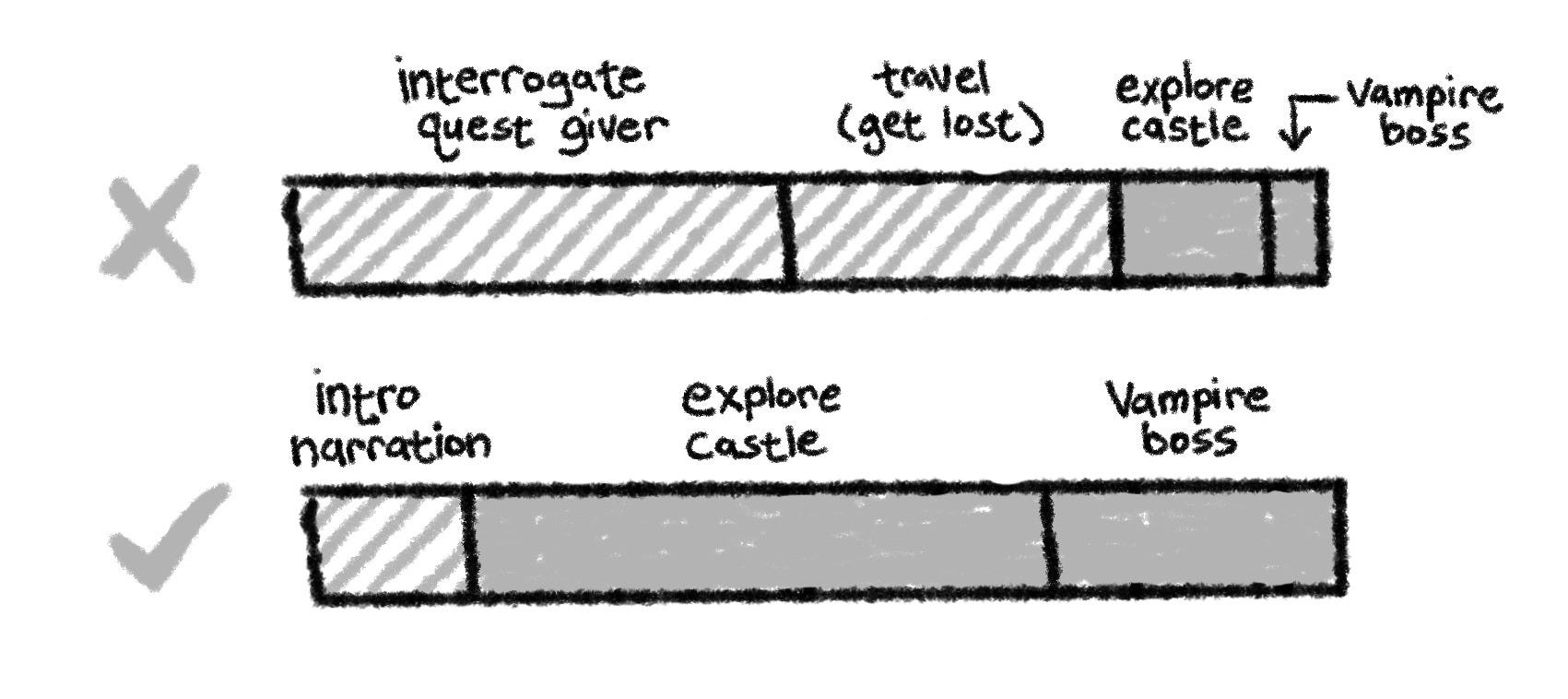
And to avoid The Slog, it’s often better to stop the session early than to push through.
Ending on a cliffhanger does a couple of things: it moves the story’s high point to the beginning of the next session, when energy is high again, and it gives the players something to look forward to next time.